Fish Tank Moving Services in Joliet, IL
Fish Tank Moving Kings provides fish tank moving, aquarium teardown and setup, and saltwater reef tank relocation services in the Joliet, IL area for both residential and commercial properties, moving the fish, water, rock and equipment along with the tank. Contact us now for a free estimate.
How Much Does Fish Tank Moving Cost in Joliet, IL?
Fish tank moving in Joliet, IL costs anywhere from $280 to $900 on average for a local move of a 55 to 125 gallon freshwater aquarium, including teardown, transport and setup. The price depends on the tank's gallons, freshwater or saltwater, how much rock, sand and livestock it holds, the sump and plumbing, stairs, and the distance.
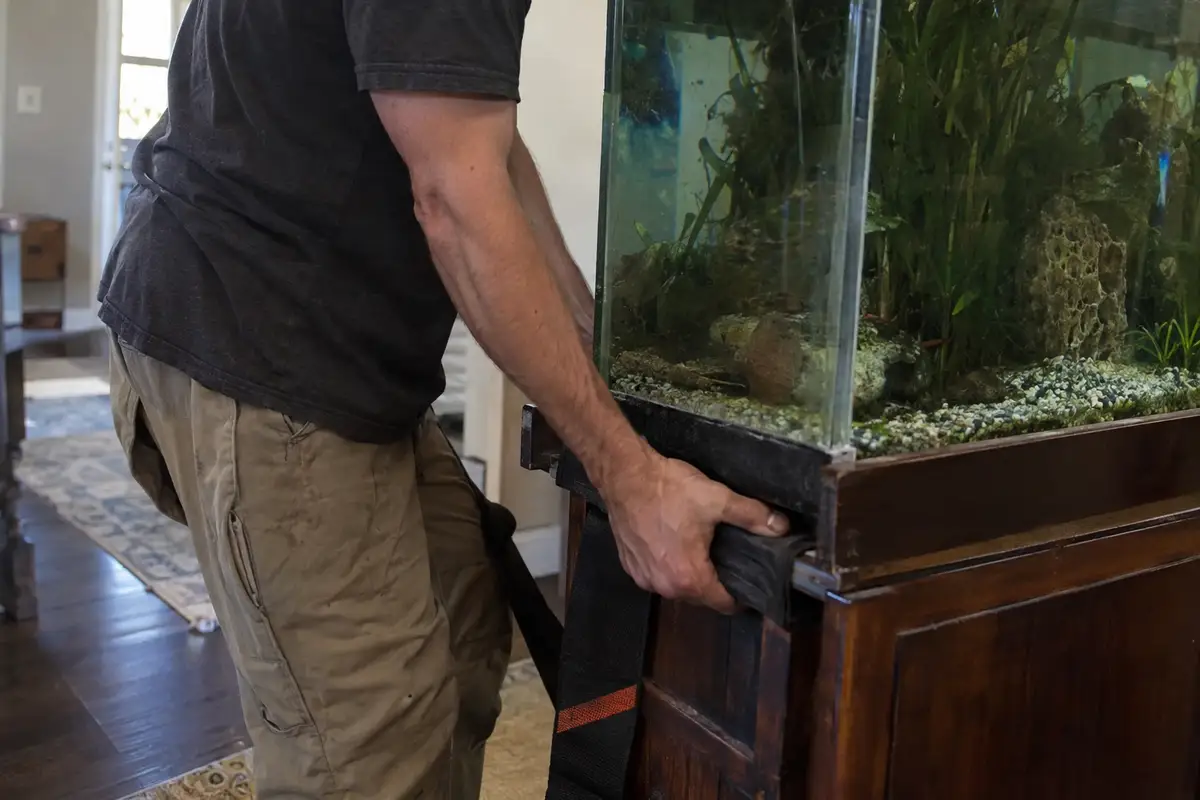
Do You Move Fish Tanks for Homes and Businesses?
Yes, we move aquariums in houses, apartments, offices, restaurants, waiting rooms, and schools. Let us know the tank size and where it's going.
Do You Service My Area?
Yes, we cover the Joliet, IL area. Send us the property address and we'll confirm.
How Do You Protect My Fish on a Snowy Winter Move in Joliet?
Joliet has a hot-summer humid continental climate with cold, snowy winters, so a winter move means keeping the fish warm between doors. We pack them in insulated coolers of their own tank water, warm the vehicle before loading, and restart the heater as soon as the tank is refilled. Clear the walkways at both homes if you can.
Do You Move the Fish Too?
Yes, we move the fish, shrimp, snails, corals, and plants along with the tank and equipment. Tell us roughly how many fish you have and how big they are.
Will Regular Movers Move My Fish Tank?
No, not with fish in it. Most moving companies won't carry live animals, and many only take a tank that's been fully emptied and dried.
Can You Tear Down and Set Up My Aquarium at the New Place?
Yes, we drain and pack the tank, move everything, then set it back up, reconnect the filter, heater, lights, and plumbing, and test the water before the fish go back in.
How Soon Can You Move My Fish Tank?
Moves are usually booked a few days to two weeks ahead, which leaves time to plan the teardown and mix water for a saltwater tank. Tell us your moving date as soon as you have it.
What Information Do You Need for a Fish Tank Moving Quote?
We need both addresses, the tank size in gallons, freshwater or saltwater, the number and size of fish, and photos of the tank, stand, and any sump. Mention stairs, elevators, or tight doorways.
Will I Need to Be There on Moving Day?
Yes, ideally at both ends, to let us in and confirm where the stand goes.
Can I Get a Price Before the Work Begins?
Yes, we confirm the price before we start. If the tank turns out to be larger or more complex than described, we talk to you before doing extra work.
Is Fish Tank Moving Priced by the Gallon?
Yes, many aquarium services charge per gallon plus a base fee, often around $4 to $5 per gallon with setup included. Saltwater systems, heavy rockwork, stairs, and longer drives usually cost more.
How Long Does a Fish Tank Move Take?
We usually finish a local move of a typical home aquarium in several hours to most of a day, teardown to setup. Large reef systems with a sump and lots of rock take longer.
Can You Move a Fish Tank With Water in It?
No, we drain it first. Water weighs about 8.3 pounds per gallon, and carrying a filled tank can crack the glass or split the silicone seams. The gravel comes out too, except on a short move inside the house.
Can You Guarantee My Fish Will Survive the Move?
No, moving stresses fish and some losses can happen. We pack them last, keep them dark in their own tank water, and acclimate them as soon as the new setup tests fine.
How Do You Keep the Fish Safe During Transport?
Each fish goes in a bag about one third full of tank water, or a lidded bucket for bigger fish, packed in a dark cooler to hold temperature. For drives over about an hour we add pure oxygen to the bags.
Can You Move a Saltwater or Reef Tank?
Yes, we move saltwater fish-only and reef systems. They take more time because of the corals, live rock, sump, and plumbing, so tell us what's in the tank and how it's plumbed.
Can You Move Live Rock and Coral?
Yes, we move live rock and coral submerged in tank water in lidded buckets or coolers, kept warm, so the bacteria and coral survive the trip.
Can You Move a Large Aquarium Over 100 Gallons?
Yes, in most cases. Large tanks need more movers, a padded dolly, and a clear path, and some services cap the size they take, so send us the dimensions and the route in.
Can You Move an Acrylic Aquarium?
Yes, and we pad acrylic tanks well because they scratch easily.
Can You Move the Aquarium Stand and Sump?
Yes, the stand, sump, and canopy move with the tank. We drain and disconnect the plumbing first, so tell us if the stand is built in or attached to the wall.
Can You Move a Planted Tank?
Yes, we move live plants in bags or buckets of tank water with the leaves kept wet. Rooted plants and carpets can be bagged with their substrate when the drive is short.
Can You Move Big Fish That Won't Fit in a Bag?
Yes, fish over about 6 inches travel in lidded buckets or sturdy coolers instead of bags. Tell us the species and size so we bring enough containers.
Can You Move a Turtle Tank?
Yes, the turtle rides in its own ventilated container while we drain and move the tank, filter, and basking lamp. Tell us the tank size and the turtle's size.
Can You Move a Fish Tank Up or Down Stairs?
Yes, with the tank fully drained and the gravel out. Large tanks on stairs take extra movers, so tell us how many flights there are and whether there's an elevator.
Can You Move My Fish Tank to Another Room in the Same House?
Yes, we move tanks across the room for flooring jobs or remodels. For a short move inside the house we can leave enough water to cover the gravel and keep the fish in a bucket nearby.
Can You Hold My Fish While My House Is Being Renovated?
Yes, in many cases we can hold fish temporarily during flooring work or a remodel. Tell us how long the work will take and how many fish need housing.
Can You Move My Fish Into a Bigger Tank?
Yes, and we bring over the established filter media so the new tank isn't starting from scratch.
Can You Pick Up a Used Tank I Bought From Someone Else?
Yes, we can tear down a used aquarium at the seller's place and set it up at yours. Get the seller to agree on a time and tell us what livestock and equipment come with it.
Can You Move an Office or Restaurant Aquarium?
Yes, we move commercial tanks and can schedule after hours so the business isn't disrupted. Let us know about loading docks, elevator bookings, or building rules.
Can You Move a Fish Tank to Another State?
Yes, sometimes, but long drives are hard on fish. We can bag fish with pure oxygen in a sealed cooler for about 6 hours, and longer trips usually mean treating the tank as new or rehoming the fish.
Should I Stop Feeding My Fish Before the Move?
Yes, stop feeding 24 to 48 hours before moving day. Healthy fish can go about a week without food, and an empty gut keeps the transport water cleaner.
Should I Drain the Tank Before You Arrive?
No, leave the water in, because we save much of it for the new setup. If you only need an empty tank hauled with no fish, drain and dry it first.
What Should I Have Ready at the New Location?
Have a clean, level spot near outlets and out of direct sunlight, with the stand or base area clear. If you have premixed saltwater or dechlorinator, set it aside for us.
How Much Does a Full Fish Tank Weigh?
Water alone weighs about 8.3 pounds per gallon, so a 75 gallon tank holds about 626 pounds before the glass, rock, and stand. For a big tank upstairs or in an older home, check with your landlord or a contractor first.
Do You Save My Old Tank Water?
Yes, we siphon about 70 to 80% of it into clean lidded 5 gallon buckets. Reusing it shortens recovery and lowers the risk of an ammonia spike.
Will My Tank Need to Cycle Again After the Move?
No, usually not on a local move, because we keep the filter media and sponges submerged in tank water so the bacteria survive. Media that dries out or sits for many hours may need a fresh cycle.
Can I Move My Fish Tank Myself?
Yes, a small tank is a fair DIY job with buckets, bags, and a helper. Call us for large, saltwater, and sump systems, where the glass and the livestock are both at risk.
How Soon Can the Fish Go Back in the Tank?
Usually the same day, once the tank is refilled, the heater has had time to bring the water up to temperature, and the water tests fine. We acclimate the fish before releasing them.
What Should I Watch for After the Move?
Hold off feeding for 24 hours, check the temperature daily for a week, and test ammonia and nitrite 3 to 5 days in. Cloudy water for a few days is common, so tell us if it isn't clearing.
